


Blog
AI toy vs traditional toy

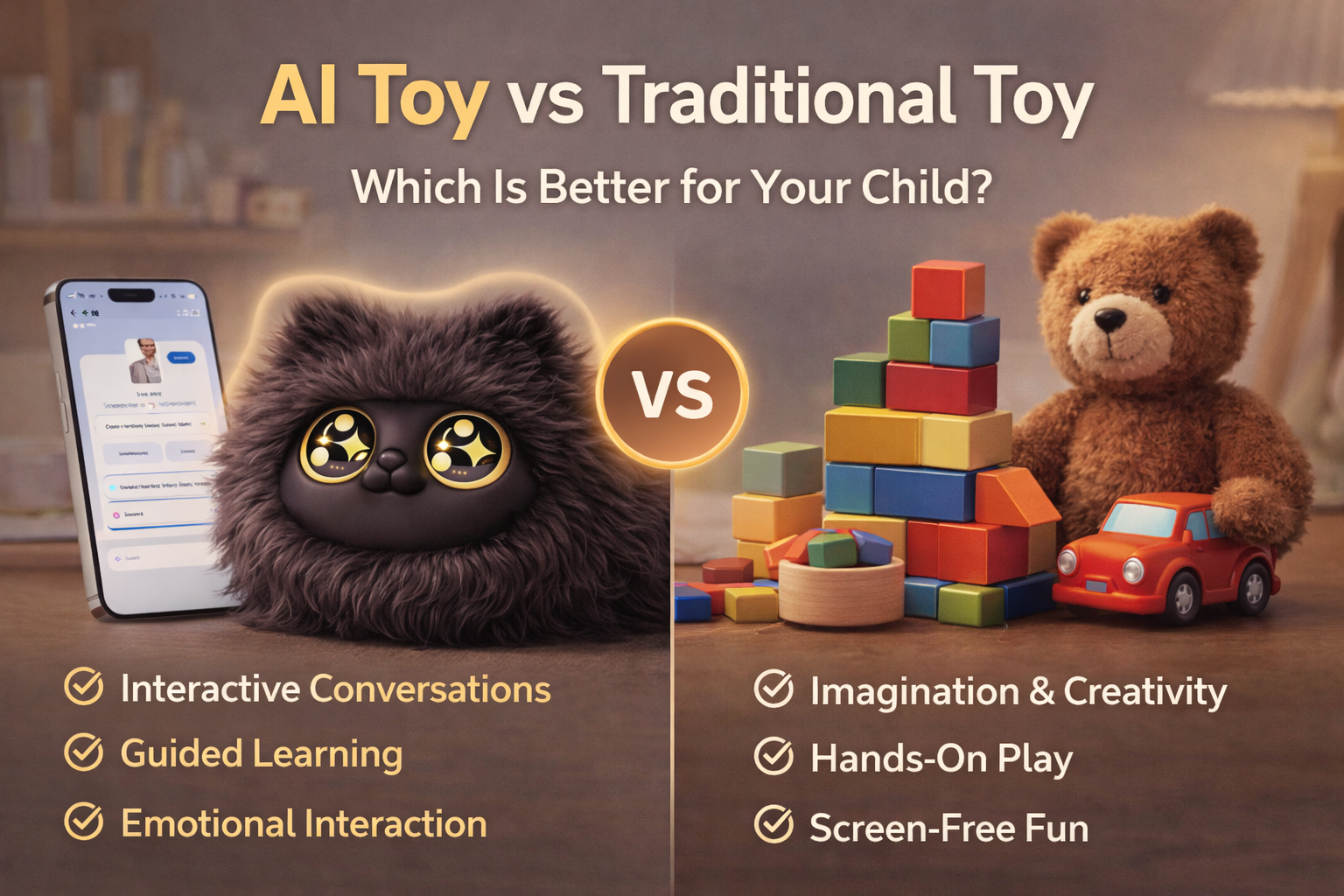
AI Toy vs Traditional Toy: Which Is Better for Your Child?
Choosing the right toy for your child is more than just picking something fun—it’s about supporting their learning, emotional development, and everyday growth. With the rise of smart technology, AI toys are becoming a popular alternative to traditional toys. So how do they really compare? Let’s break it down and help you decide which option is best for your child.
What Is an AI Toy?
An AI toy is a smart, interactive toy powered by artificial intelligence. These toys can recognize voices, respond to questions, hold simple conversations, tell stories, and even adapt to a child’s age and interaction level. Many AI toys can also be managed through a mobile app, giving parents more control over content and usage.
Examples include AI talking plush toys, voice-interactive robots, and smart learning companions.
What Is a Traditional Toy?
Traditional toys include items like plush toys, building blocks, dolls, cars, puzzles, and board games. They don’t rely on technology and instead encourage imagination, physical interaction, and hands-on play.
Traditional toys have been loved for generations and remain an important part of childhood.
Key Differences: AI Toy vs Traditional Toy
1. Interactivity
- AI Toys:
AI toys actively respond to a child’s voice and actions. They can ask questions, answer back, and create two-way conversations, making playtime more engaging and dynamic. - Traditional Toys:
Interaction is driven entirely by the child’s imagination. While this encourages creativity, the toy itself does not respond or adapt.
Winner: AI Toys for interactive engagement
2. Learning & Education
- AI Toys:
Many AI toys are designed to support language development, storytelling, pronunciation, and early learning skills. Some even offer multilingual support and adaptive learning levels. - Traditional Toys:
Educational value depends on how the toy is used. Puzzles and building blocks are great for problem-solving and motor skills, but they don’t provide guided learning or feedback.
Winner: AI Toys for guided learning and speech development
3. Emotional Companionship
- AI Toys:
AI toys can act as emotional companions, responding with comforting words, encouragement, and playful conversations. This can be especially helpful for children who need emotional support or confidence in speaking. - Traditional Toys:
Plush toys can provide comfort, but the emotional connection relies entirely on the child’s imagination.
Winner: AI Toys for emotional interaction
4. Creativity & Imagination
- AI Toys:
While highly engaging, AI toys may guide play in specific directions based on their programmed responses. - Traditional Toys:
Open-ended play encourages children to invent stories, roles, and worlds without limitations.
Winner: Traditional Toys for free imagination
5. Parental Control & Safety
- AI Toys:
Many AI toys offer app-based controls, allowing parents to manage content, volume, and usage time. High-quality AI toys are designed with child safety and privacy in mind. - Traditional Toys:
No digital risks, no screen time, and minimal setup. Safety depends mainly on materials and design.
Winner: Tie — depends on parental preference
6. Long-Term Engagement
- AI Toys:
Thanks to evolving conversations and adaptive responses, AI toys often stay interesting for longer periods. - Traditional Toys:
Some traditional toys may lose novelty over time, while others (like building blocks) remain engaging for years.
Winner: AI Toys for dynamic engagement
So… Which One Should You Choose?
The truth is, AI toys and traditional toys each have unique strengths.
- Choose AI toys if you want:
- Language and speech development
- Interactive conversations
- Emotional companionship
- Personalized learning experiences
- Choose traditional toys if you value:
- Imagination-driven play
- Hands-on creativity
- Simple, screen-free experiences
For many families, the best solution is a balance of both—combining the creativity of traditional toys with the intelligence and interaction of AI toys.
A Smarter Way to Play
Modern AI talking toys, like soft, voice-interactive plush companions, are designed to feel warm, friendly, and child-safe—while helping kids learn, speak, and grow with confidence. They don’t replace traditional toys; they enhance the play experience.
If you’re looking to give your child a toy that offers both fun and meaningful interaction, an AI toy could be the perfect addition to your home.
Ready to Explore AI Toys?
Discover how AI talking toys can transform playtime into a learning and emotional experience.
A really good blog and me back again.